ASUU: Stakeholders Bowing to B’Haram’s wishes, say VCs
The Committee of Vice-Chancellors of Nigerian Universities has said stakeholders in the education sector across the country are succumbing to the missions of the terrorist organisation, Boko Haram, for not resolving the prolonged strike of the Academic Staff Union of Universities.
Speaking in an interview with The PUNCH on Sunday, the chairman of CVCNU, Prof. Samuel Edoumiekumo, explained that the government and all concerned stakeholders, including the presidency, past governments, governors’ forum and parents had not shown commitment toward education and the demands of ASUU.
This, he stated, was proof that the country was succumbing to the mission of Boko Haram, saying Boko Haram means ‘Western education is forbidden.’


The PUNCH had reported that ASUU announced a total and indefinite strike on August 29, 2026, over its unmet demands by the Federal Government.
Edoumiekumo said, “For me, stakeholders in this country are succumbing to Boko Haram because Boko Haram means ‘we don’t want western education.
“If we continue like this, it means Boko Haram has won the war. Their own is ‘we don’t want to go to school; we don’t want to go to university.’ Instead of the government prioritising education so that we can win the war against Boko Haram, we are succumbing to that. I am pleading as the chairman of CVCNU, the work is on my head, let all stakeholders put their hands on the deck to support education in Nigeria.
“With what is happening over the ASUU strike, we are succumbing to Boko Haram, let us not succumb to Boko Haram but work on our education challenges.”
He also advised the government and all stakeholders in the education sector, to as a matter of urgency, resolve the ongoing ASUU strike, adding that no nation, leader, would rise above its intellectual prowess.
ASUU constitutes panel
Meanwhile, ASUU has constituted a seven-member committee to address what it tagged a smear media campaign against the union.
In a leaked letter of appointment addressed to one of the nominees, and signed by the union’s President, Emmanuel Osodeke, the union saddled the committee with the responsibility to develop strategies to tackle the alleged media campaign against the union’s decision to continue with the industrial action.
The letter read in part, “ASUU is at a very critical stage of its struggle toward the survival of public universities in Nigeria. It has been observed that a lot of media propaganda to misinform and malign the union is ongoing. The union appreciates your efforts in responding to this media war.
“The trustees and principal officers of the union decided to constitute a rapid response committee to immediately respond to various media publications, opinions and interviews among others, that may be against the interest of the union.”
The committee is made up of four professors and three PhD holders.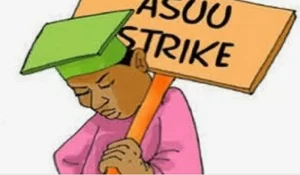
Prof Ade Adejumo of the Ladoke Akintola University of Technology is the convener of the committee. The members include Prof Joseph Ushie of the University of Uyo; Prof Abdulgafar Amoka of the Ahmadu Bello University; Dr Adelaja Odukoya of the University of Lagos; Dr Taiwo Obateru of the University of Jos; and Dr Otu Akanu of the Alex Ekwueme Federal University, Ndufu- Alike, Ikwo. Prof Victor Igbum of Benue State University is the secretary.
Related Article: TOP SCHOLARSHIPS TIPS 2026
Contents
FAQs:
What did vice‑chancellors mean by “bowing to Boko Haram’s wishes”?
The Committee of Vice‑Chancellors of Nigerian Universities argued that the failure of government and stakeholders to urgently resolve the prolonged ASUU strike reflects a surrender to the ideology of Boko Haram, which opposes Western education. They said continuing strike stalemate without strong action is tantamount to allowing Boko Haram’s anti‑education mission to succeed.
Why did the VCs make this comparison?
According to the vice‑chancellors, Boko Haram’s core aim is to reject Western education — encapsulated in its name — and a prolonged paralysis of the education system through unresolved strike issues allows that objective to flourish. They urged stakeholders to prioritise education to prevent that outcome.
Who are the stakeholders referred to?
Stakeholders include the Federal Government, governors’ forum, parents, and other education sector leaders. The VCs criticised these groups for not showing enough commitment to addressing ASUU’s demands and reopening universities, which they fear enables extremist narratives against formal education.
What is ASUU’s position in this context?
ASUU went on a total and indefinite strike in 2026 over unresolved demands related to funding, university autonomy, payment of earned allowances, and revitalisation of public universities. While vice‑chancellors blame inaction for weakening education, ASUU insists its demands are essential for sustainable improvement of the university system.
How have these comments been received in the education sector?
The VCs’ remarks drew mixed reactions: some see the analogy as a passionate call to protect Nigeria’s education system, while others view it as an overstatement. The comments underscore the deep frustration among university leaders over decades‑long education challenges and repeated industrial actions.