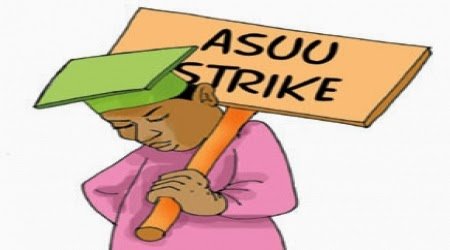
BREAKING: Again, ASUU Extends Strike
The ongoing industrial action by the Academic Staff Union of Universities (ASUU) has taken another turn as the union announces a fresh extension of its strike. This latest development has once again disrupted academic activities across public universities in Nigeria, leaving millions of students in uncertainty.
In this detailed report, we examine the reasons behind the extension, the response from the Federal Government of Nigeria, and what it means for students, parents, and the education sector at large.
Contents


Background of the Strike
The current ASUU strike did not start overnight. It is part of a long-standing dispute between ASUU and the Federal Government of Nigeria over unresolved agreements and the condition of Nigeria’s public universities.
The strike initially began as a warning action but gradually evolved into a prolonged industrial dispute due to unmet demands. Over time, repeated negotiations have failed to produce a lasting solution, forcing ASUU to continue its action.
Why ASUU Extended the Strike Again
ASUU cited several reasons for extending the strike, including:
1. Failure to Implement Agreements
The union insists that previous agreements—especially the 2009 ASUU-FG agreement—have not been fully implemented. These agreements cover funding, infrastructure, and staff welfare.
2. Inadequate University Funding
ASUU argues that public universities remain underfunded, leading to deteriorating facilities, overcrowded classrooms, and declining educational standards.
3. Unpaid Allowances
Outstanding earned academic allowances owed to lecturers remain a major issue. ASUU maintains that these payments are essential for staff motivation and productivity.
4. Dispute Over Payment Platforms
There is also disagreement over the use of government payment systems. ASUU prefers its own system, UTAS, over the government’s IPPIS platform.
Federal Government’s Response
The Federal Government of Nigeria has repeatedly stated that it has made significant progress in addressing ASUU’s demands. Officials claim that a large percentage of the issues have been resolved and have called on ASUU to return to the classroom.
However, ASUU has countered this claim, insisting that partial solutions are not enough and that all agreements must be fully implemented before the strike can be called off.
Impact on Students and the Education Sector
The continuous extension of the strike has far-reaching consequences:
-
Academic Delays: Students experience prolonged academic calendars, delaying graduation timelines.
-
Psychological Stress: Uncertainty about resumption affects students’ mental health.
-
Shift to Private Institutions: Many parents are considering private universities to avoid disruptions.
-
Brain Drain: Prolonged disputes may push talented lecturers to seek opportunities abroad.
Reactions from Stakeholders
The strike has drawn reactions from various stakeholders:
-
Students: Many have expressed frustration and called for immediate resolution.
-
Parents: Concerned about the future of their children’s education.
-
Education Experts: Urge both parties to find a lasting solution to prevent recurring strikes.
What Happens Next?
The future of the strike depends largely on renewed negotiations between ASUU and the Federal Government of Nigeria. Analysts believe that a resolution will require:
-
Genuine commitment from both parties
-
Full implementation of agreements
-
Improved funding for public universities
Until then, the strike remains a significant challenge to Nigeria’s education system.
Conclusion
The decision by the Academic Staff Union of Universities to extend its strike again highlights the deep-rooted issues in Nigeria’s university system. While the Federal Government of Nigeria claims progress, ASUU insists that much more needs to be done.
For students and parents, the hope remains that both sides will reach a lasting agreement soon, restoring stability to academic activities across the country.
Related Article: ASUU Strike Enters 140th Day: Lecturers Speak on Coping Amid Salary Freeze
FAQs:
Why did ASUU extend the strike again?
ASUU extended the strike due to unresolved issues such as unpaid allowances, poor funding, and failure to implement previous agreements.
How long has the ASUU strike lasted?
The duration varies depending on the phase, but some strikes have lasted several months due to prolonged negotiations.
What is the government’s position on the strike?
The Federal Government of Nigeria claims it has resolved most of ASUU’s demands and urges lecturers to resume work.
How does the strike affect students?
It disrupts academic calendars, delays graduation, and creates uncertainty for students in public universities.
When will the strike end?
There is no fixed date. The strike will likely end only when both ASUU and the government reach a mutual agreement.