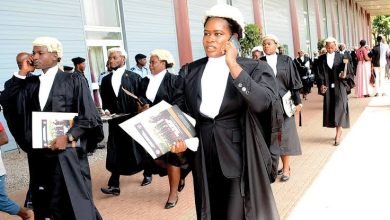
How Buhari Rejected ASUU’s Demand for Six Months Salaries
Date: Thursday (exact date not specified in report)
Context:
President Muhammadu Buhari directed that the “no work, no pay” policy be invoked against striking university lecturers following a briefing from Education Minister Adamu Adamu on the status of negotiations with the Academic Staff Union of Universities (ASUU).
The decision came after the President expressed displeasure that:


-
ASUU’s demands had been reduced mainly to six months’ salary arrears.
-
The government had already approved a 35% salary increase for professors and 27% for other lecturers.
-
Other university staff unions had agreed to suspend strikes, but ASUU continued its action.
Key Points from the Report
1. Government Position:
-
President Buhari was reportedly shocked that lecturers were dissatisfied despite substantial salary increases.
-
The Education Minister was instructed to implement “no work, no pay” to impress upon lecturers the negative impact of the strike.
-
The government argues the strike has disrupted academic activities, depriving students of timely education.
2. ASUU’s Stand:
-
ASUU claims the strike is justified due to unfulfilled agreements by the government, including revitalisation of universities and release of salary arrears.
-
ASUU emphasizes that university lecturers do more than teaching—they also conduct research and community service.
-
The union asserts it has legal backing for its strike actions.
3. Call for Union Liberalisation:
-
The Congress of University Academics (CONUA) advocates for freedom of association in academia to allow lecturers to choose their unions.
-
CONUA notes that strikes have caused over 1,417 days of lost academic activities (1999–2021) and calls for urgent stakeholders’ meetings to find lasting solutions.
4. Public Opinion & Stakeholders’ Views:
-
Some Nigerians and activists argue that invoking “no work, no pay” is morally wrong under the circumstances:
-
Senator Shehu Sani: Urges compromise, noting students have lost an academic session.
-
Comrade Alagoa Morris & Prof. Obasi Igwe: Advocate for government to pay lecturers to resume teaching.
-
Pastor Chijioke Nwokeke & Bishop Samuel Ezeofor: Call for negotiations and personal engagement between President and lecturers.
-
-
Critics argue the policy fails to account for research and community service, which lecturers continue to perform during strikes.
5. Points of Contention:
-
Government cites “no work, no pay” as standard labor law.
-
ASUU and activists argue the government is partly at fault due to unfulfilled agreements dating back to 2009.
-
The strike is now in its sixth month, with significant impact on students, research, and academic calendars.
Summary of Opinions
| Stakeholder | Position |
|---|---|
| President Buhari / Govt | “No work, no pay”; lecturers must appreciate the setback caused |
| ASUU | Strike justified due to unfulfilled agreements; demands salary arrears |
| CONUA | Advocate for liberalisation of unions; strikes harm students |
| Senators & Activists | Encourage compromise; pay lecturers to resume academic work |
| Clergy & Civil Society | Call for negotiation and installments; protect students’ academic interests |
Related Article: ASUU Opposes Education Loan, Demands Withheld Salaries
Key Takeaways
-
ASUU strike continues despite government efforts and other unions suspending theirs.
-
No work, no pay policy has been officially invoked for striking lecturers.
-
Salary arrears, university revitalisation, and unfulfilled agreements remain the core dispute.
-
Public and civil society largely urge compromise and a student-first approach rather than strict enforcement of the law.
-
The strike has severely disrupted university education, potentially affecting graduation timelines and future workforce readiness.