Advanced Higher Biology Course Specification
Contents
What the Course Is
Advanced Higher Biology is a senior-level biology qualification in the Scottish curriculum, taken after Higher Biology or Higher Human Biology. It builds on earlier study and usually prepares learners for university-level biological science or related courses such as medicine, veterinary science, environmental science, or biological research.


The course aims to develop:
-
A deep understanding of cellular and organismal biology
-
Practical investigative biology skills
-
Analytical thinking and scientific literacy
-
Ability to evaluate biological research and communicate scientific ideas effectively
Course Structure
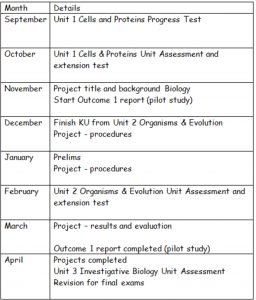
The Advanced Higher Biology course is divided into three core units:
1. Cells and Proteins
Covers:
-
Laboratory techniques used by biologists
-
Proteins and their functions
-
Membrane proteins and transport
-
Cellular communication and signalling
-
Protein control of cell division and regulation
2. Organisms and Evolution
Focuses on:
-
Field techniques and sampling methods
-
Evolutionary processes like natural and sexual selection
-
Variation and sexual reproduction
-
Behavioural ecology (sex and behaviour)
-
Parasitism and inter-organism interactions
3. Investigative Biology
Develops practical research skills, including:
-
Scientific principles and experimental design
-
Conducting valid biological investigations
-
Data collection and statistical analysis
-
Reporting results and critically reviewing scientific work
Assessment Breakdown
Assessment in Advanced Higher Biology includes two main components:
1. Question Paper (External Exam)
-
Typically 100 marks (scaled so the exam accounts for roughly 75% of total assessment)
-
Includes multiple-choice, structured, and extended-response questions
-
Assesses broad understanding, application of knowledge, data handling, and analytical skills
2. Project (Coursework)
-
Often worth 30 marks (about 25% of total assessment)
-
Students carry out an independent investigation on a chosen biology topic
-
Requires planning, experimental or research work, data analysis, and a written report
-
Encourages autonomy and critical evaluation skills
Skills and Learning Outcomes
Learners engaging in Advanced Higher Biology will develop:
✅ Deep biological knowledge — at molecular, cellular, and organismal levels
✅ Practical and laboratory skills — including designing and conducting experiments
✅ Analytical thinking — interpreting and evaluating biological data
✅ Scientific communication — clear explanation of methods and findings
✅ Independent research skills — planning and completing a substantial project
Recommended Entry Requirements
While entry is at the discretion of schools/colleges, candidates typically need a strong pass (often A or B) in Higher Biology or Higher Human Biology before progressing to Advanced Higher Biology.
Related Article: Online Spray tan courses
Why Take Advanced Higher Biology?
Students study Advanced Higher Biology mainly to:
-
Prepare for biological science degrees at university
-
Develop research and practical lab skills
-
Gain a qualification recognised for advanced study or career progression in science, health, or research fields