Pay Rise: FG Excludes State Varsities, ASUU kicks
The ongoing industrial dispute between the Federal Government and the Academic Staff Union of Universities (ASUU) may worsen following the position of the Federal Ministry of Education that any fresh agreement reached with the union will not be binding on state-owned universities.
Speaking in Abuja, the ministry’s spokesperson, Ben Goong, explained that education is on the concurrent legislative list, meaning the Federal Government cannot compel state governments to adopt agreements negotiated at the federal level.
According to him, any agreement reached with ASUU would only apply to federal universities, while state governments would determine conditions for their own institutions.


Related Article: Strike: We Acted On Court Order, Issues Still Unresolved – ASUU
Contents
Salary Review Committee and Proposed Increase
A renegotiation committee led by Nimi Briggs, the Pro-Chancellor of the Federal University of Lokoja, was reported to have recommended a 180 per cent salary increase for lecturers.
However, the Federal Government was said to be considering a 100 per cent increase instead.
It was gathered that several government bodies — including the Ministries of Finance, Education, Labour and Employment, the Budget Office of the Federation, the Office of the Head of Service of the Federation and the National Salaries, Income and Wages Commission — were still working on the final details of the proposal.
ASUU Rejects FG’s Position
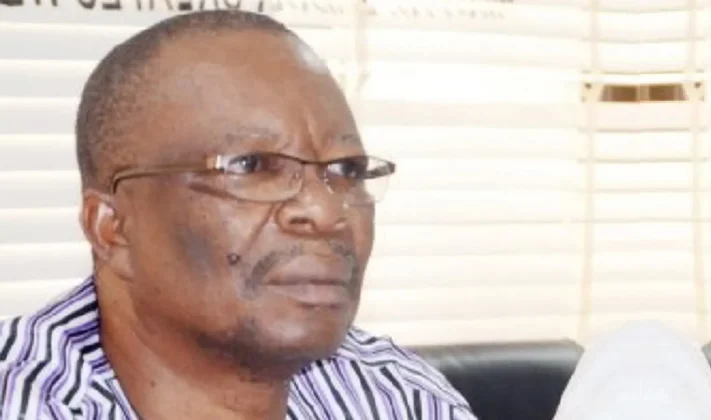
Reacting to the ministry’s position in an interview with The Punch, the ASUU President, Emmanuel Osodeke, insisted that any agreement reached with the Federal Government must apply to both federal and state universities.
According to him, Nigeria operates a single university system, and there should be no separation between federal and state institutions when it comes to lecturers’ welfare.
He said the renegotiation team itself consists of pro-chancellors from both federal and state universities, questioning how an agreement could be restricted to federal institutions alone.
Osodeke also maintained that ASUU represents lecturers across the country and that institutions not participating in the strike are not members of the union.
Background to the Strike
ASUU commenced its nationwide strike on February 14, 2022, involving both federal and state universities.
After efforts by the former Minister of Labour and Employment, Chris Ngige, failed to resolve the crisis, President Muhammadu Buhari directed the Minister of Education, Adamu Adamu, to take over negotiations with ASUU.
In support of the lecturers, the Nigeria Labour Congress (NLC) staged nationwide protests on July 26 and 27.
Despite this, ASUU recently extended the strike by another four weeks.
States React to the Controversy
The Ekiti State Commissioner for Information, Akin Omole, said the Ekiti State Government was not part of the negotiations between the Federal Government and ASUU and therefore would not be bound by any agreement, particularly as it concerns staff of Ekiti State University.
Similarly, the Benue State Commissioner for Information, Culture and Tourism, Michael Inalegwu, said Benue State was not involved in the talks and warned that any agreement could have serious financial implications for the state, although he expressed optimism that a compromise could be reached with the state chapter of ASUU.
On the other hand, the Anambra State Commissioner for Education, Ngozi Chuma-Udeh, said Anambra State participated in the negotiations and would implement whatever outcome is agreed upon.
In Osun State, the governor’s Special Adviser on Education, Jamiu Olawumi, noted that if lecturers’ salaries were reviewed upward, states would expect financial support from the Federal Government.
The Gombe State Commissioner for Higher Education, Meshack Lauco, disclosed that the state had resolved most of ASUU’s demands, except for issues relating to earned allowances.
Meanwhile, the Ogun State Government said it would first study the final agreement reached with ASUU before committing to its implementation.
Students’ Body Calls for Minister’s Resignation
The National Association of Nigerian Students (NANS) has also entered the debate, calling for the resignation of the Minister of Education.
The student body said that under his tenure, ASUU had embarked on prolonged strikes that had seriously disrupted the Nigerian tertiary education system.
Related Article: List of Universities That Are Not Under ASUU
FAQs:
Why did the Federal Government say the ASUU agreement will not bind state universities?
The Federal Ministry of Education said education is on the concurrent legislative list, meaning the Federal Government cannot impose agreements on state governments regarding the management of their universities.
What salary increase was proposed for university lecturers?
The ASUU renegotiation committee reportedly recommended a 180 per cent salary increase, but the Federal Government is considering a lower increase of about 100 per cent.
What is ASUU’s position on the agreement covering state universities?
ASUU insists that Nigeria operates one university system and that any agreement reached with the Federal Government must apply to both federal and state universities.
Are state governments united on whether to implement the agreement?
No. Some states, such as Ekiti and Benue, say they were not part of the negotiations and may not be bound by the outcome, while Anambra State says it participated and will implement whatever is agreed.
Has the strike been suspended?
No. ASUU has extended the ongoing nationwide strike by another four weeks, despite protests by labour unions and continued negotiations with the Federal Government